 skip to content


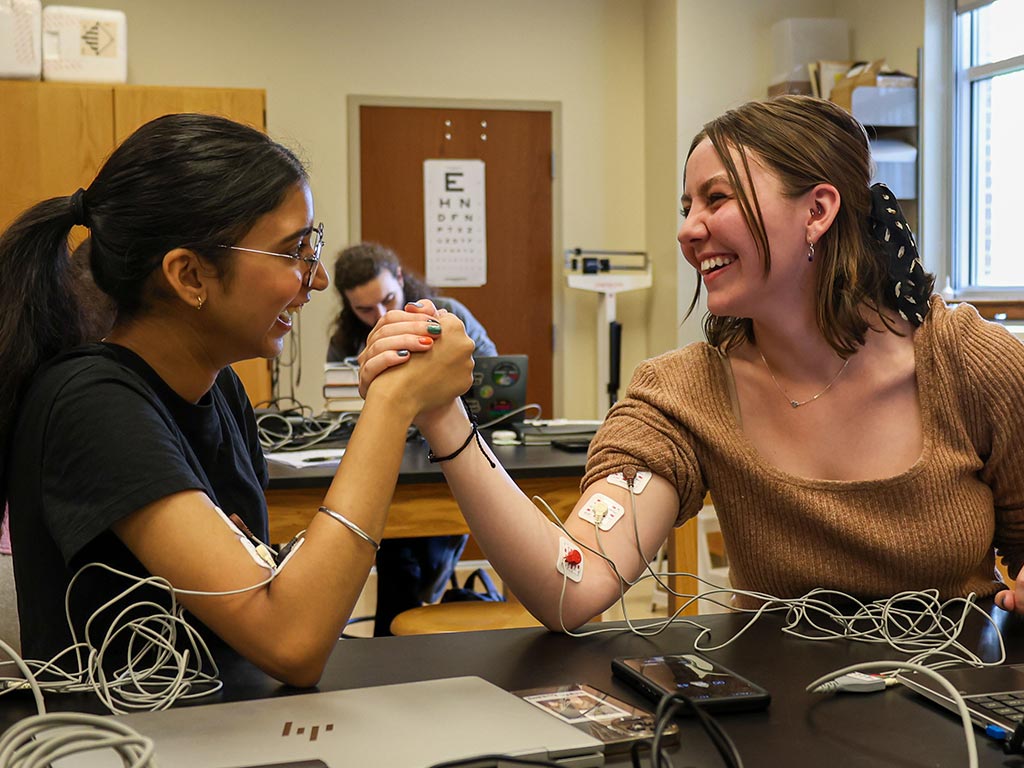
By taking a brain-based perspective on human behavior, you will acquire foundational
knowledge about the structure and function of the nervous system which will allow
for a new level of understanding of cognition, emotion, physiology, disease, and disorder.
As you move through your neuroscience coursework and engage in experiential learning
opportunities, you will gain knowledge and skills in molecular/cellular neuroscience,
cognitive/behavioral neuroscience, systems neuroscience, and other related fields.
By taking a brain-based perspective on human behavior, you will acquire foundational
knowledge about the structure and function of the nervous system which will allow
for a new level of understanding of cognition, emotion, physiology, disease, and disorder.
As you move through your neuroscience coursework and engage in experiential learning
opportunities, you will gain knowledge and skills in molecular/cellular neuroscience,
cognitive/behavioral neuroscience, systems neuroscience, and other related fields.
-
 Featured Alumni
Olivia Drake '20
POE: NeuroscienceOlivia is currently a Post-Baccalaurette research fellow at the National Institute on Drug Abuse.
Learn From Experts in Many Fields
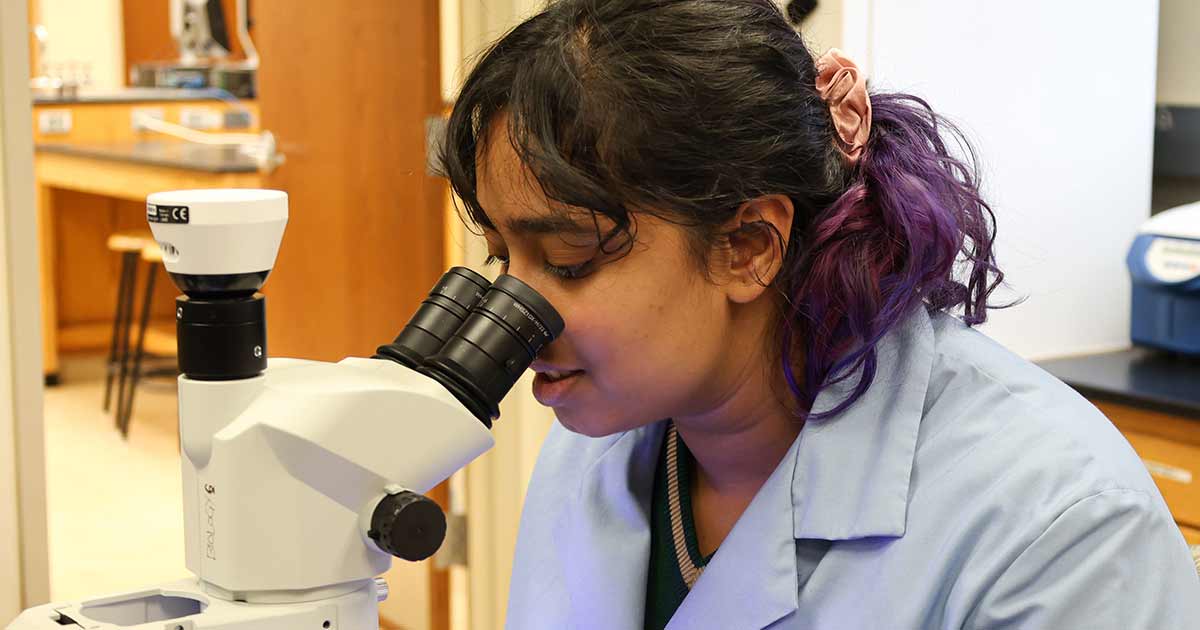
Juniata’s neuroscience program integrates the study of psychology, chemistry, biology, computer science, economics, education, and philosophy. Some courses are team-taught by professors from several of these areas of expertise, which helps you identify your specific interests in neuroscience.
Learn From Experts in Many Fields
Juniata’s neuroscience program integrates the study of psychology, chemistry, biology, computer science, economics, education, and philosophy. Some courses are team-taught by professors from several of these areas of expertise, which helps you identify your specific interests in neuroscience.
Career Opportunities
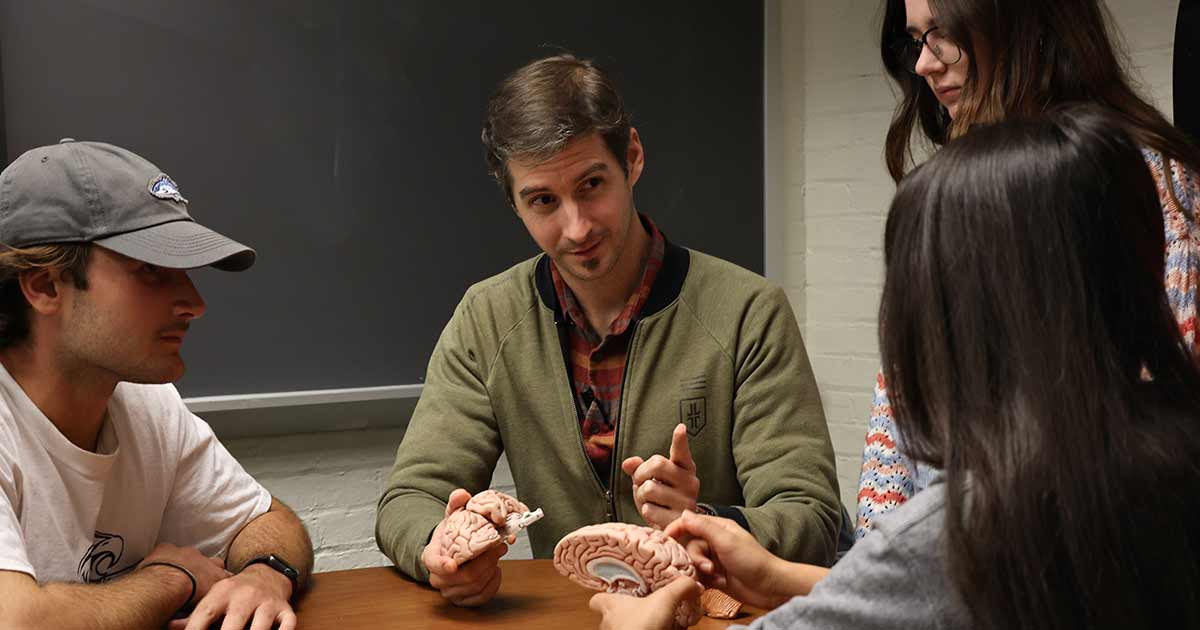
Students who study neuroscience have a broad range of career opportunities available upon graudation from Juniata. Among the many careers that benefit from a neuroscience degree are the following: research assistant, laboratory technician, health educator, pharmaceutical sciences manager, research scientist, clinical psychologist, medical writer, physician assistant, neurosurgeon, biostatistician, and neurologist.
Career Opportunities
Students who study neuroscience have a broad range of career opportunities available upon graudation from Juniata. Among the many careers that benefit from a neuroscience degree are the following: research assistant, laboratory technician, health educator, pharmaceutical sciences manager, research scientist, clinical psychologist, medical writer, physician assistant, neurosurgeon, biostatistician, and neurologist.
Conduct Research
You can study a variety of topics about the brain and nervous system, from Alzheimer’s and Parkinson’s disease to stress resilience. When studying neuroscience, you’ll answer questions using thought processes from many disciplines—analyzing everything from the chemicals of the brain to a person’s behavior—and understand how many fields of study intersect.

Conduct Research
You can study a variety of topics about the brain and nervous system, from Alzheimer’s and Parkinson’s disease to stress resilience. When studying neuroscience, you’ll answer questions using thought processes from many disciplines—analyzing everything from the chemicals of the brain to a person’s behavior—and understand how many fields of study intersect.